Coin Collector Communities
Solitary collecting limits perspective. European numismatic communities provide peer-reviewed attribution, hoard research updates, and library archives unavailable to individual buyers.
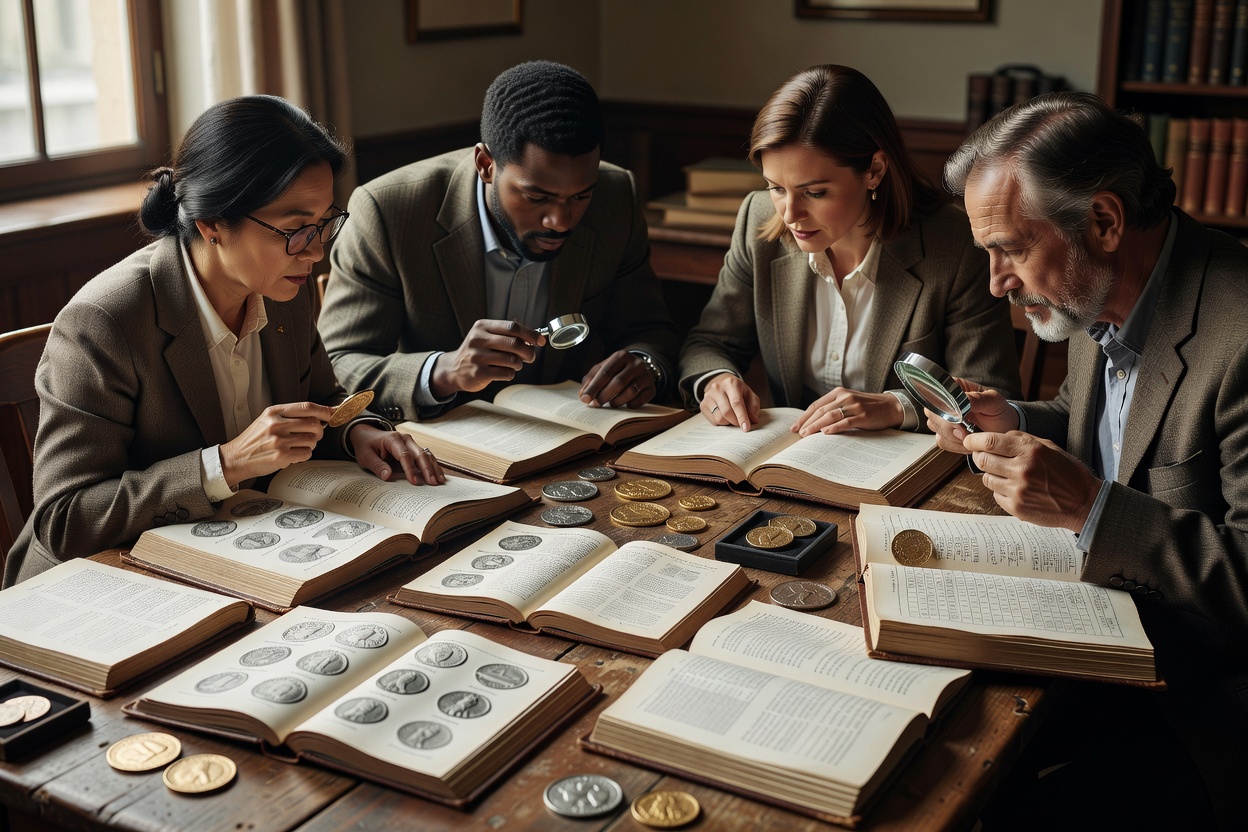
1. Historical Learned Societies
National numismatic societies have documented coinage since the nineteenth century. Organizations such as the Royal Numismatic Society and British Numismatic Society in the United Kingdom, the Société Française de Numismatique in France, and the Österreichische Numismatische Gesellschaft in Austria publish peer-reviewed annual journals.
Membership provides access to institutional research libraries, regular lecture series, and specialized working groups focused on specific historical reigns.
2. Specialized Period Study Circles
Beyond national societies, European collectors organize into specialized study circles dedicated to single coinages:
Ancient & Celtic Circles
Study iron age tribal issues, Roman provincial mints, and Greek stater dies. Focus on hoard distribution and metrology.
Medieval Bracteate Groups
Examine wafer-thin single-sided silver bracteates of twelfth-century central Europe. Die links establish feudal territorial chronology.
Early Modern Thaler Societies
Track city-state emissions, emergency siege klippes, and mining thalers across the Holy Roman Empire regions.
Modern Token & Medal Circles
Investigate trade tokens, civic medals, and coronation commemorative medallions struck from the Industrial Revolution onward.
3. Responsible Collector Discourse
Scientific numismatics separates responsible collectors from unregulated antiquities trading. Ethical communities adhere to clear standards:
- Provenance Verification: Refuse to purchase unprovenanced ancient coins originating from illicit looting zones or conflict areas.
- Public Hoard Reporting: Support statutory treasure reporting frameworks (such as the Portable Antiquities Scheme in England and Wales).
- Shared Die Registries: Contribute high-resolution photographs to non-commercial academic die corpuses to benefit global research.
- Counterfeit Warnings: Promptly publish detected deceptive forgeries and transfer dies to alert fellow collectors and museum curators.
4. Digital Forums vs. Physical Assemblies
Digital discussion boards allow immediate cross-border image evaluation when identifying ambiguous inscriptions. However, physical society assemblies remain irreplaceable for handling genuine cabinet specimens under expert guidance.
Combining regular physical meeting attendance with digital study board participation provides the fastest learning curve for serious amateur researchers.
Comparing Society Membership with Open Internet Groups
Peer-Reviewed Societies
- Rigorous verification by published museum curators.
- Access to proprietary academic library lending collections.
- Immunity from commercial dealer hype and speculative manipulation.
Unmoderated Social Groups
- High prevalence of misinformation regarding coin values.
- Frequent promotion of altered coins and modern tourist fakes.
- Superficial commentary lacking primary reference citations.
Good For
Enthusiasts wishing to publish original research notes, verify unlisted die varieties, and participate in ethical cultural preservation networks.
What to Know
When presenting an inquiry to a study group, always include weight to 0.01 g, exact diameter, die axis, and clean in-focus photos taken outside direct sunlight.