European Coin Identification
Attribution requires measurable evidence. Follow this six-stage analytical routine to determine issuing authority, date, mintmaster, metal fineness, and catalog taxonomy.
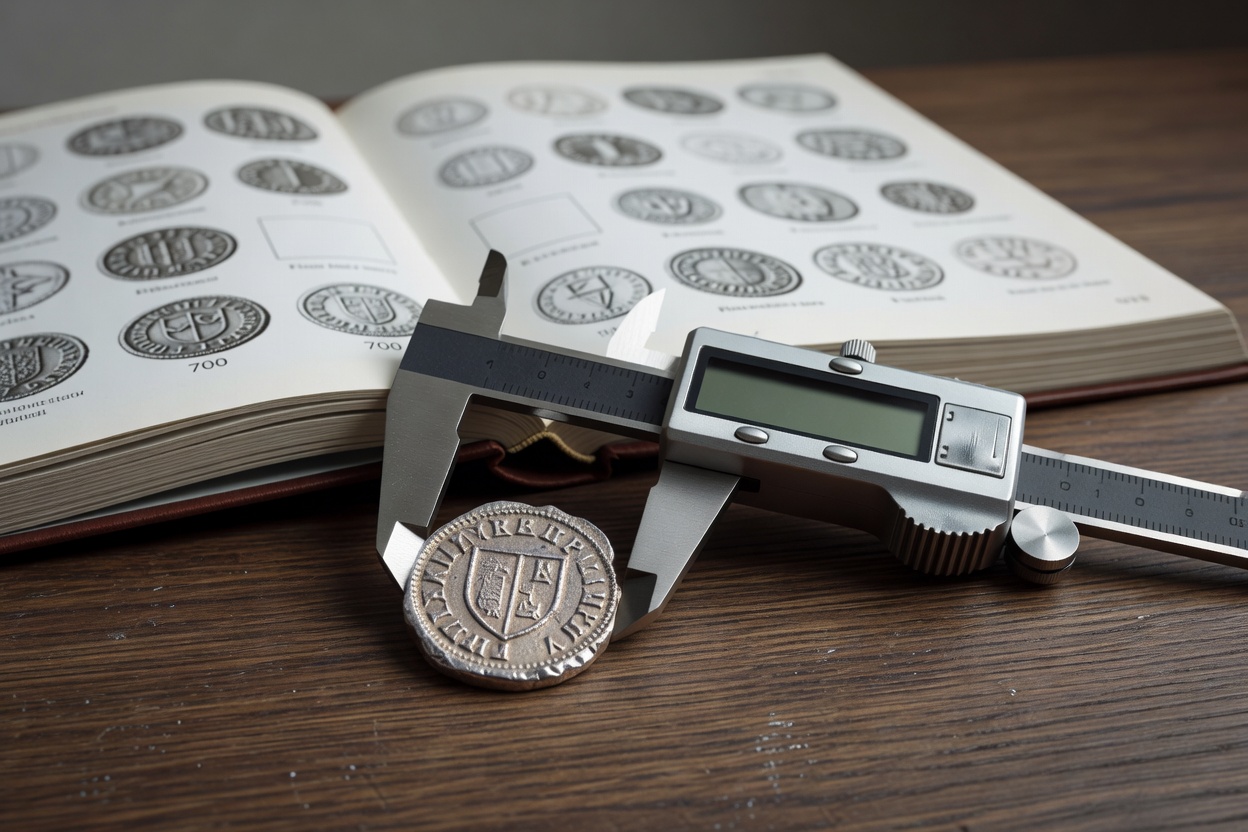
1. Physical Dimensions and Die Axis
Begin with objective physical metrics before reading inscriptions:
Weight (Grams)
Weigh to two decimal places (0.01 g). Ancient and medieval flans exhibit tolerance variations, but modern machine-milled coins must adhere strictly to statutory legal specifications.
Diameter & Thickness (mm)
Measure maximum and minimum diameters. Ancient hammered coins are rarely perfectly circular. Uniformly round flans on hammered issues suggest modern cast counterfeits.
Die Axis (Clock Orientation)
Hold the coin vertically by the edges at 12 o'clock and flip horizontally. If the reverse is upright, the die axis is 12h (medallic alignment). If inverted, it is 6h (coin alignment).
Edge Structure
Inspect the rim. Milled coins feature reeded, lettered, or ornamental edges designed to prevent clipping. Seams or file marks on edges indicate two-piece cast counterfeits.
2. Deciphering Latin Epigraphy and Legends
Most European coinage from the Roman Empire through the late nineteenth century incorporates abbreviated Latin. Common imperial and royal titles include:
- D G (Dei Gratia): "By the Grace of God" — Standard royal formula preceding or following the sovereign's name.
- REX / REG (Rex / Regina): King / Queen. Often coupled with territorial claims (e.g., BRITANNIARUM REX or HISPANIARUM REX).
- IMP (Imperator): Emperor. Found on Roman, Holy Roman Empire, French Second Empire, and German Empire issues.
- DUX (Duke) & ARCHID (Archidux): Found extensively on feudal Italian, German, and Austrian state issues.
3. Mint Marks and Mintmaster Symbols
European kingdoms operated regional mint networks to supply commerce. The mint identifier indicates location and legal accountability:
In France, letter mint marks were standardized: A signified Paris, K signified Bordeaux, L signified Bayonne. In the German states, mintmasters placed small privy symbols (rosettes, anchors, initials, crossed hammers) directly into the die legend. Identifying these symbols narrows undated medieval strikes down to a specific mintmaster's operational tenure.
4. Standard Reference Catalogs
Professional numismatists never rely on search engines alone. Correlate your specimens with standard published reference corpuses:
- Roman Imperial: Roman Imperial Coinage (RIC), Volumes I–X.
- Ancient Greek: Sylloge Nummorum Graecorum (SNG).
- German Thalers: Davenport (German Church and City Talers / German Talers).
- British Hammered: Spink Standard Catalogue of British Coins.
- World Machine-Milled (1601–Present): Krause-Mishler (KM) standard catalogs.
Visual Attribution vs. Scientific Assay
Visual Epigraphy
- Rapid non-destructive identification of sovereign and date.
- Pinpoints specific mint mark locations and varieties.
- Matches known engraver portrait styles in reference works.
XRF & Specific Gravity
- Reveals underlying metallic fineness without acid tests.
- Detects modern base metal cores inside gold plating.
- Requires specialized laboratory equipment or bench instruments.
Good For
Systematic collectors seeking definite attribution of unattributed estate coins, hoards, worn medieval billon, and complex Holy Roman Empire varieties.
What to Know
Never rely on a single feature. A coin with the correct obverse legend but incorrect weight or inverted die axis is often an altered cast or fantasy piece.